







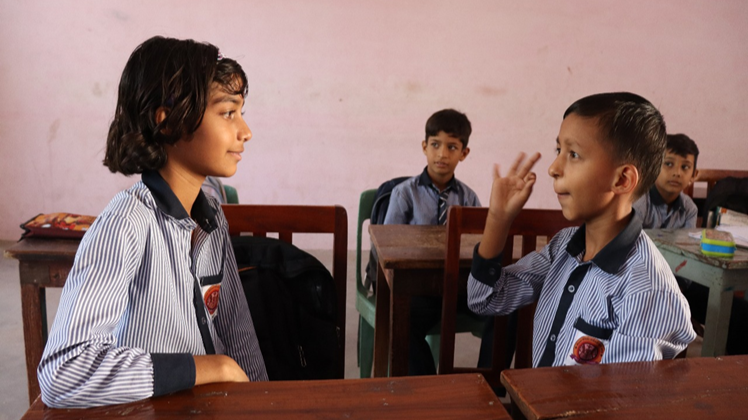
Eight-year-old Meera, a child with a speech and hearing impairment, stepped into her new school filled with curiosity and quiet anxiety. Her parents kept wondering- Would she be able to follow the lessons? Would her classmates understand her?
At first, the classroom felt overwhelming. But her teacher understood her needs and made simple yet powerful changes: adding visuals, using sign language, incorporating video lessons, and introducing a buddy system that helped Meera feel comfortable. Soon, her classmates learned basic sign language so they could communicate with her.
Day by day, Meera began to participate more, communicate better and even lead group activities. The educators at her school suggested home-based activities to help her communicate with her family and make friends in the neighbourhood. She also began taking part in sports and won a medal in race.
Building a society where every learner gets the opportunity to thrive
Meera’s story is more than an example of inclusive education. It reflects what International Day of Persons with Disabilities 2025 calls us to recognise: that disability inclusion is essential for social progress. When we build environment where every learner belongs, we lay the foundation for a society that value participation, equity, and dignity for all.
This year’s global theme also echoes the commitments made at the Second World Summit for Social Development held on November 2025, where nations agreed to advance social justice and expand opportunities for all—especially for people who have historically been marginalised. Inclusion in schools is one of the most powerful pathways to achieving this vision.
Turning Policy into Action
India’s Rights of Persons with Disabilities (RPwD) Act 2016 mandates equal participation and access for children with disabilities. NEP 2020 strengthens this national commitment by embedding inclusion and equity into the very core of education reforms.The legal and policy framework together can help build inclusive societies.
For parents, these policies guarantee their child’s right to learn in a school that accepts them and adapts to their needs. Teachers hold the responsibility to make classrooms flexible, understanding needs of each student, implementing varied teaching methods. For community stakeholders, the policies highlight their role in ensuring schools and community spaces are accessible and that all children with disabilities are supported to attend and stay in school. And for the wider community, these policies ask people to move beyond stigma, see disability as part of human diversity, and treat every child with dignity.
When each stakeholder understands and acts on these responsibilities, inclusion becomes more than a school effort—it becomes the foundation for a compassionate, equitable society where every person belongs.
A School That Shows What Inclusion Looks Like in Practice
Piramal Foundation, guided by the vision has made inclusion a priority. Inclusion is not seen as a specialised service but as a societal value. To move ahead on this journey, NEP 2020 is the roadmap for building disability-inclusive communities, one school at a time.
Seth Piramal Senior Secondary School in Jhunjhunu is driving inclusion across abilities, gender and socio-economic strata. Once a boys-only school , the school now ensures access to children with diverse needs, backgrounds and girls, creating a thriving co-educational space.
It has students with diverse needs (27%), girls (30%) and children from marginalized and disadvantaged backgrounds (43%) all studying together under the same roof. Inclusion here, is modelled every day as general and special educators co-plan lessons so each and every child participate. Here students stands as strong examples of collaboration, learning to internalize empathy, embracing differences while supporting each another in growth.
I have been studying at Piramal School in Class 9. When I joined I noticed that all types of children, including children with disabilities, study here. When I slowly started talking to them, I realized that I could learn alongside them. I learned many things from them, such as sign language and Braille. They are my friends, and they share everything with me, and I share everything with them. I had never imagined this would be possible, but today I am very happy to be a proud student of this inclusive school”.- Manjeet, Student
This culture of belonging is reinforced through equal participation—children with disabilities now join assemblies, sports, arts, and even NCC training, with one child with an intellectual disability leading a dance performance that not only boosted her confidence but strengthened the school’s belief in inclusive opportunities.
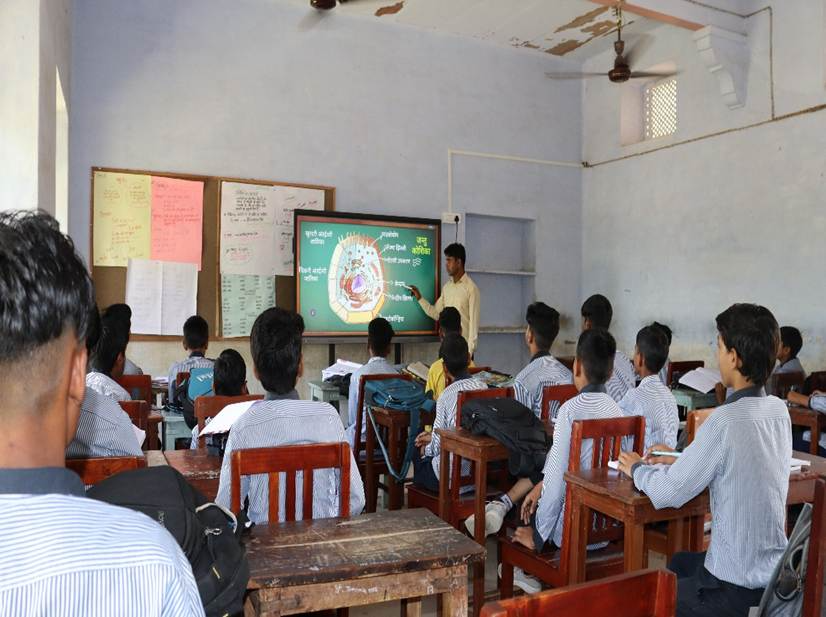
In classrooms, visual timetables, structured routines, and multi-sensory materials have become part of everyday practice, benefitting all learners—those with attention challenges, language barriers, or anxiety—and helping normalize support systems as a standard feature of quality education rather than an exception meant only for a few. Teachers at this school are viewing diversity as a strength, not a challenge, and approach each student with patience, curiosity, and respect.
“Inclusive school builds confidence, promotes equality, and makes education accessible for everyone. Being part of an inclusive school has made me a better teacher and a better human being. It has shown me that when we include every child, we are creating a supportive environment for children to learn and be happy.”
—Chandresh, Teacher
Gender inclusion has also become an integral part of this transformation. Girls are participating in academics, cultural programmes, sports, and NCC training, challenging stereotypes and shaping a more equitable school culture.
Inclusion extends beyond classroom
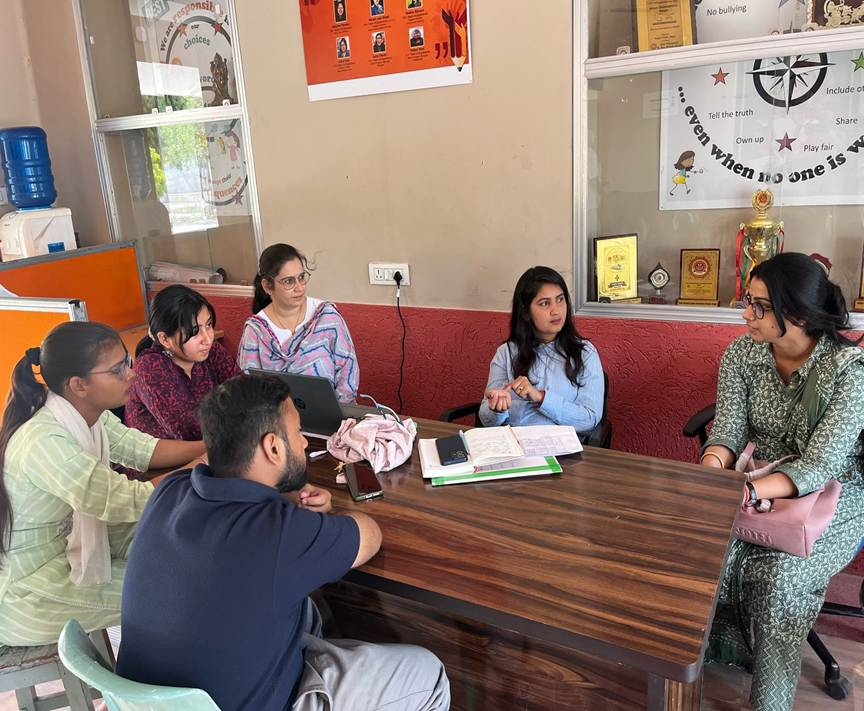
Through home visits, parent groups, and conversations, outreach team help families understand their child’s sensory, communication, or learning needs. Fellows lead awareness in the community, challenging long-held beliefs while increasing visibility. Parents are now beginning to see their children not through the lens of limitation or hopelessness, but through possibility. This shift in perspective reduces shame and secrecy—two of the strongest drivers of stigma.
“My son Madhav has been at Piramal School for three years. At his previous school, he was not accepted, but here he has found happiness and confidence. The supportive environment and individual attention make this school truly inclusive. I am hopeful about my child and grateful that there is a school where children with disabilities are welcomed, valued, and given a fair chance at a brighter future”
— Parent
A supportive household reinforces a child’s confidence, making inclusion sustainable. As children grow up in such environments, they carry lessons of empathy and collaboration into future workplaces, advocating for accessibility and inclusive cultures. Over time, these everyday experiences reshape social norms—families become more accepting, teachers become advocates, and children learn to see diversity as natural—creating a society where inclusion is not an exception but an expectation.
How Inclusive Education Seeds an Inclusive Society
True inclusive education means all children learning together in the same classrooms—with dignity, participation, and support. It is the foundation of a society that values equity and recognises the contributions of persons with disabilities.
On International Day of Persons with Disabilities 2025, the global theme reminds us:
A society cannot progress unless every individual can participate fully— and education is where that participation begins.
By translating NEP 2020 into daily practice, Piramal Foundation is contributing to a future where disability inclusion is not an exception but a norm—where inclusive schools grow into inclusive societies, and inclusive societies shape an inclusive nation.
TAGS
SHARE


